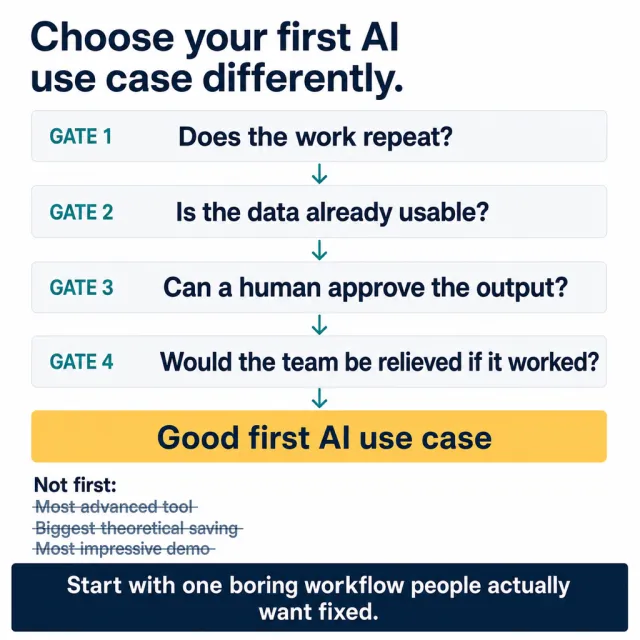
Post visual for Choose your first AI use case differently.

Choose your first AI use case differently.

Four gates: does the work repeat, is the data usable, can a human approve the output, would the team be relieved if it worked.
Start with one boring workflow people actually want fixed.
View on LinkedIn →
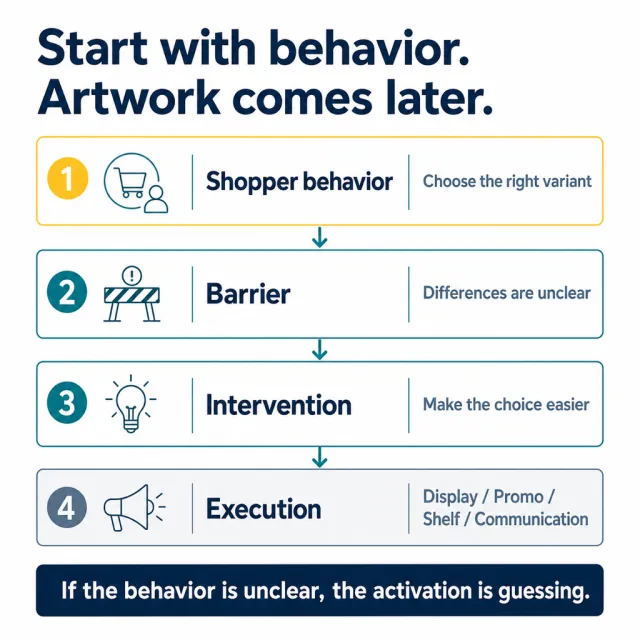
Post visual for Start with behavior. Artwork comes later.

Start with behavior. Artwork comes later.

Shopper behavior → barrier → intervention → execution. Most activations start at step four.
If the behavior is unclear, the activation is guessing.
View on LinkedIn →
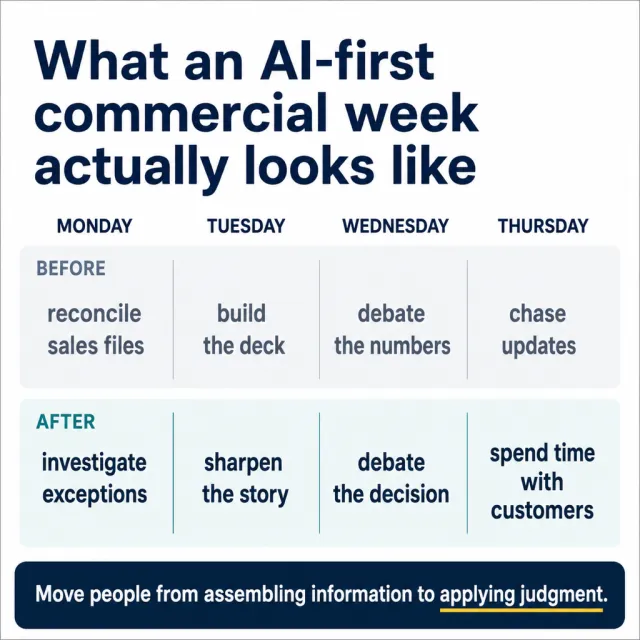
Post visual for What an AI-first commercial week actually looks like.

What an AI-first commercial week actually looks like.

Before: reconcile files, build the deck, debate the numbers, chase updates. After: investigate exceptions, sharpen the story, debate the decision, see customers.
Move people from assembling information to applying judgment.
View on LinkedIn →
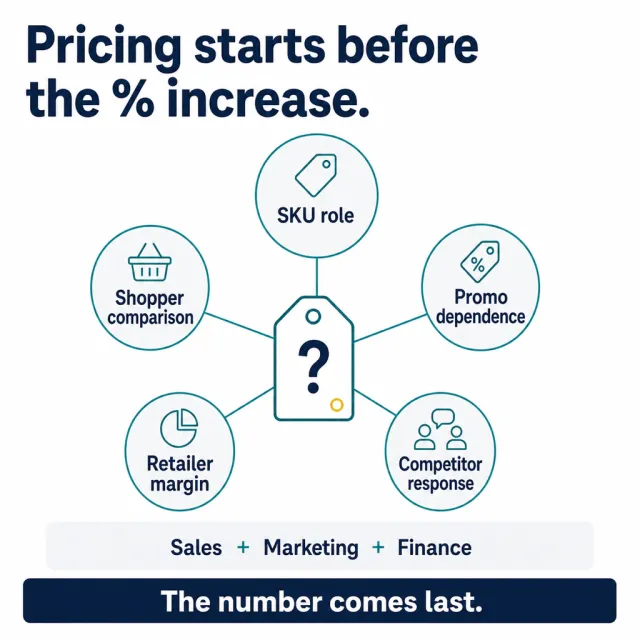
Post visual for Pricing starts before the % increase.

Pricing starts before the % increase.

SKU role, shopper comparison, promo dependence, retailer margin, competitor response — then, and only then, the percentage.
The number comes last.
View on LinkedIn →
Post visual for Your AI problem may be a workflow problem.

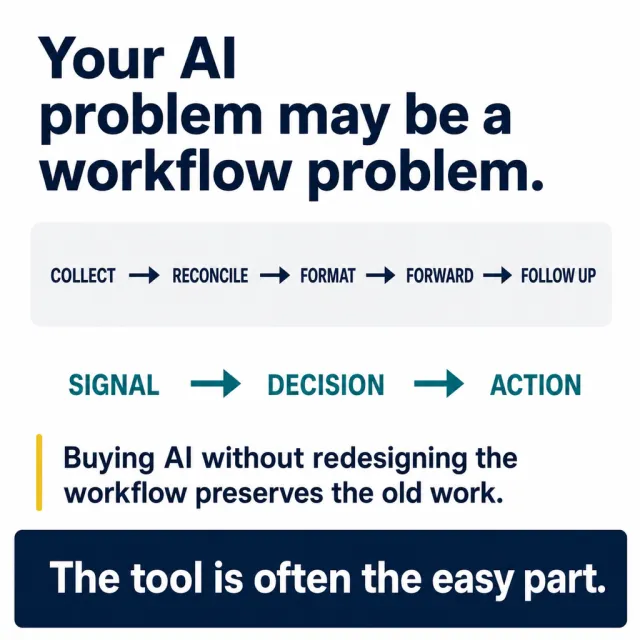
Your AI problem may be a workflow problem.

Collect → reconcile → format → forward → follow up. Buying AI without redesigning that chain preserves the old work.
The tool is often the easy part.
View on LinkedIn →
Post visual for The GCC fits on one slide. The business does not.

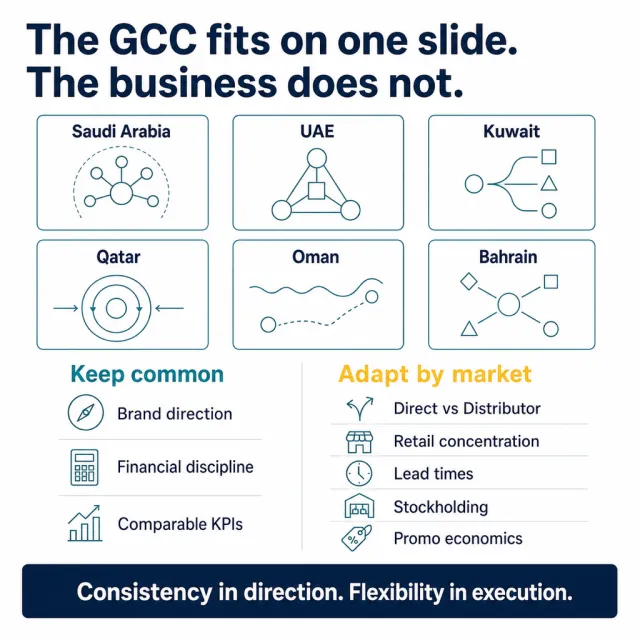
The GCC fits on one slide. The business does not.

Keep brand direction, financial discipline and KPIs common. Adapt route-to-market, retail concentration, lead times and promo economics by market.
Consistency in direction. Flexibility in execution.
View on LinkedIn →
Post visual for AI pilots rarely fail at the demo. They fail when the work becomes real.

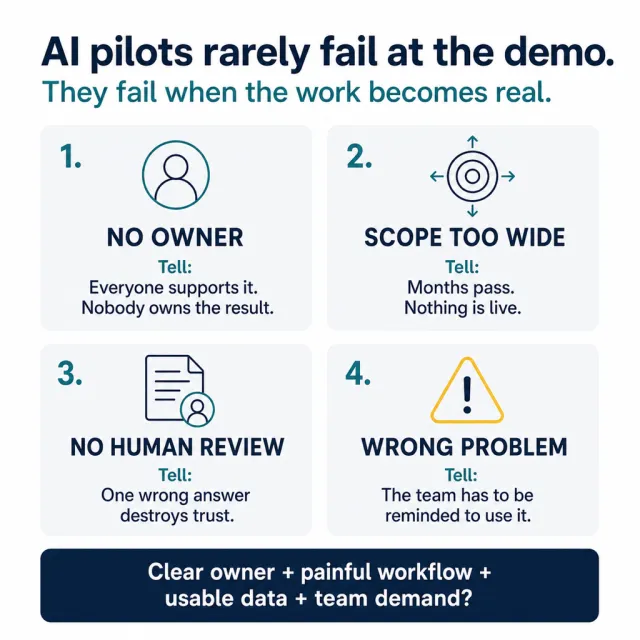
AI pilots rarely fail at the demo. They fail when the work becomes real.

Four tells: no owner, scope too wide, no human review, wrong problem.
Clear owner + painful workflow + usable data + team demand.
View on LinkedIn →
Post visual for A forecast can be right. The assumption can be wrong.

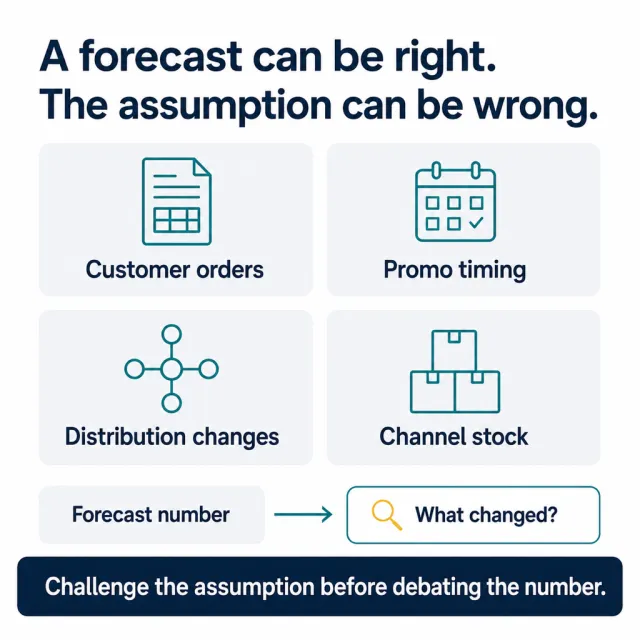
A forecast can be right. The assumption can be wrong.

Customer orders, promo timing, distribution changes, channel stock — ask what changed before you argue about the total.
Challenge the assumption before debating the number.
View on LinkedIn →
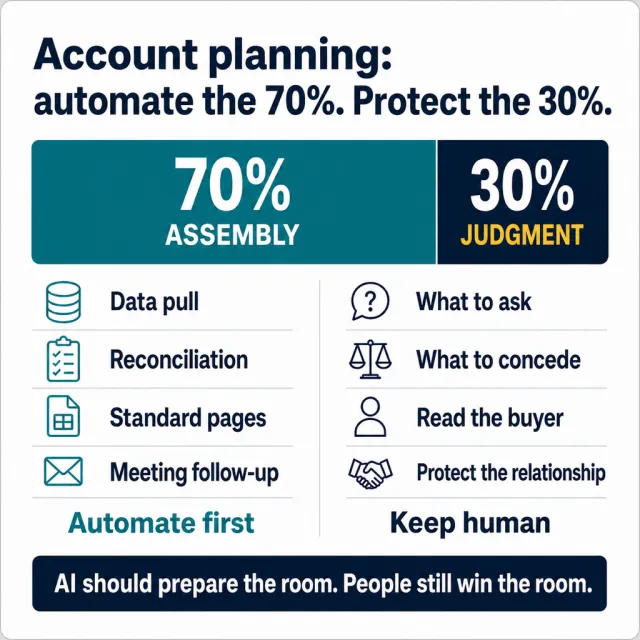
Post visual for Account planning: automate the 70%. Protect the 30%.

Account planning: automate the 70%. Protect the 30%.

Data pull, reconciliation, standard pages, follow-up — automate. What to ask, what to concede, reading the buyer — keep human.
AI should prepare the room. People still win the room.
View on LinkedIn →
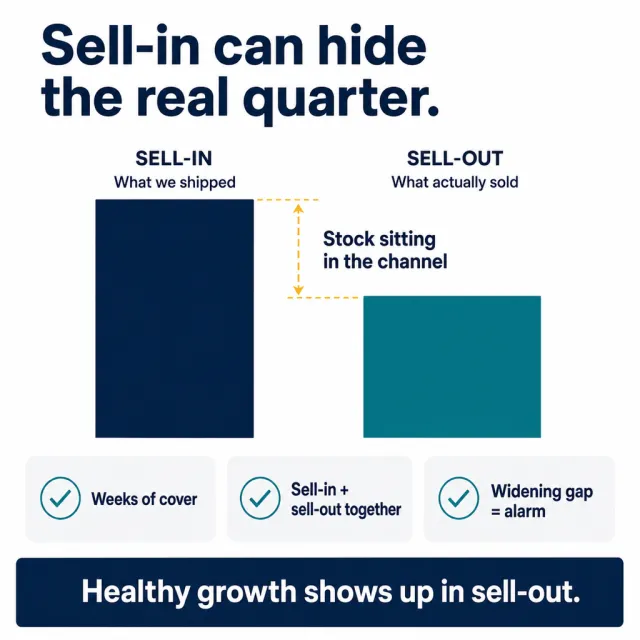
Post visual for Sell-in can hide the real quarter.

Sell-in can hide the real quarter.

Weeks of cover, sell-in and sell-out together, and a widening gap treated as an alarm.
Healthy growth shows up in sell-out.
View on LinkedIn →
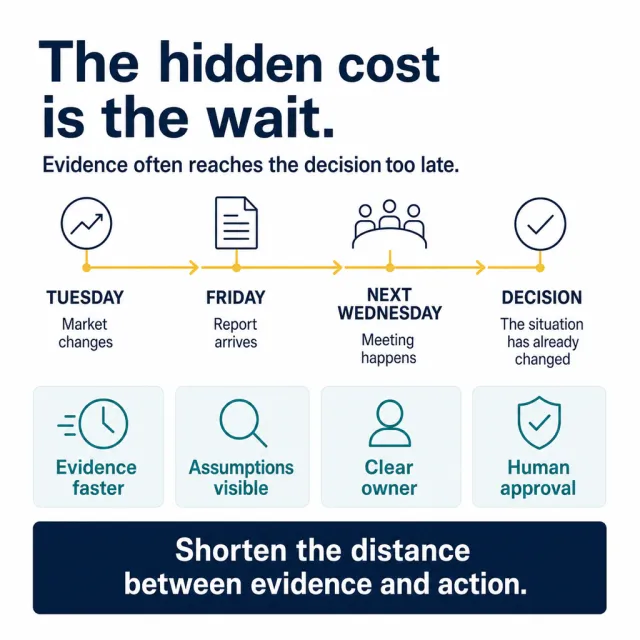
Post visual for The hidden cost is the wait.

The hidden cost is the wait.

Market changes Tuesday. Report arrives Friday. Meeting next Wednesday. By the decision, the situation has moved.
Shorten the distance between evidence and action.
View on LinkedIn →
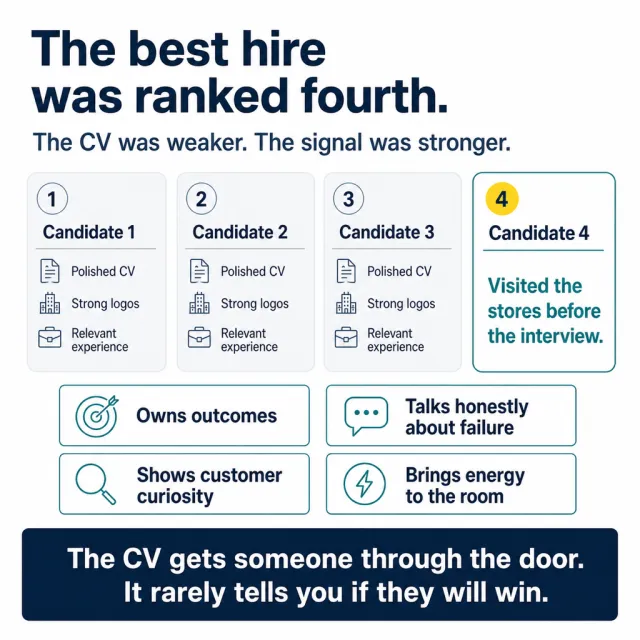
Post visual for The best hire was ranked fourth.

The best hire was ranked fourth.

Three polished CVs with strong logos. One candidate who visited the stores before the interview.
The CV gets someone through the door. It rarely tells you if they will win.
View on LinkedIn →
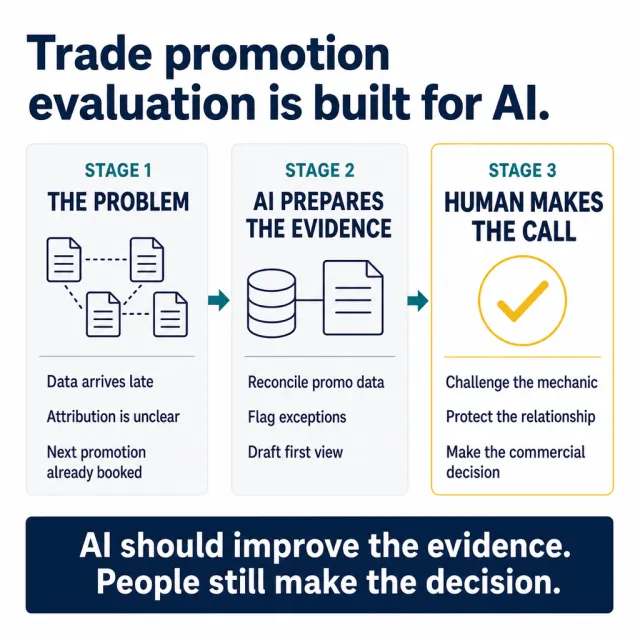
Post visual for Trade promotion evaluation is built for AI.

Trade promotion evaluation is built for AI.

Data arrives late, attribution is unclear, the next promo is already booked. Let AI reconcile and flag; let people challenge the mechanic.
AI should improve the evidence. People still make the decision.
View on LinkedIn →
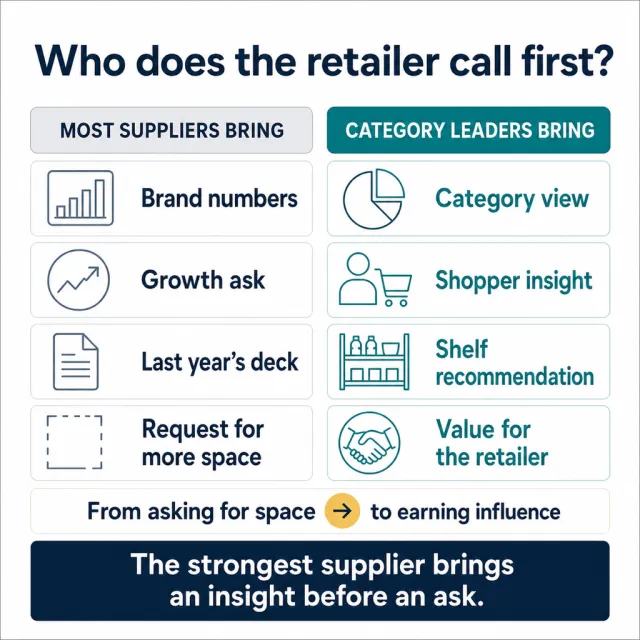
Post visual for Who does the retailer call first?

Who does the retailer call first?

Most suppliers bring brand numbers and a growth ask. Category leaders bring a category view, shopper insight and a shelf recommendation.
The strongest supplier brings an insight before an ask.
View on LinkedIn →
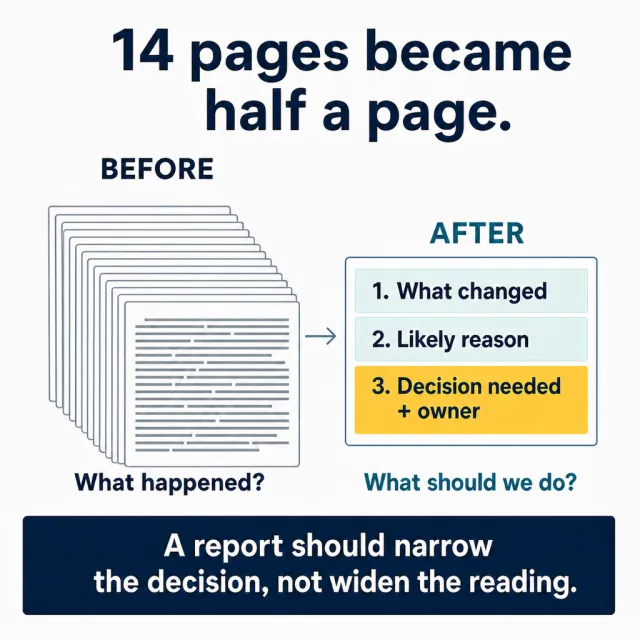
Post visual for 14 pages became half a page.

14 pages became half a page.

What changed. Likely reason. Decision needed, and who owns it.
A report should narrow the decision, not widen the reading.
View on LinkedIn →
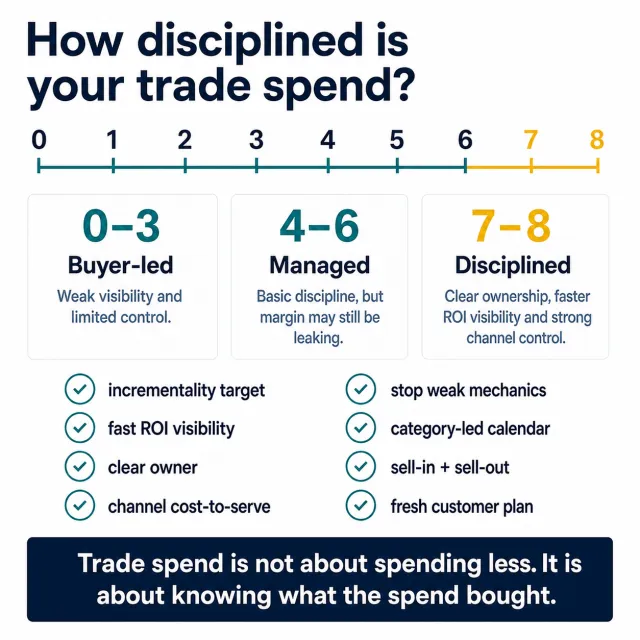
Post visual for How disciplined is your trade spend?

How disciplined is your trade spend?

An eight-point scorecard: buyer-led, managed, or disciplined.
Trade spend is not about spending less. It is about knowing what the spend bought.
View on LinkedIn →
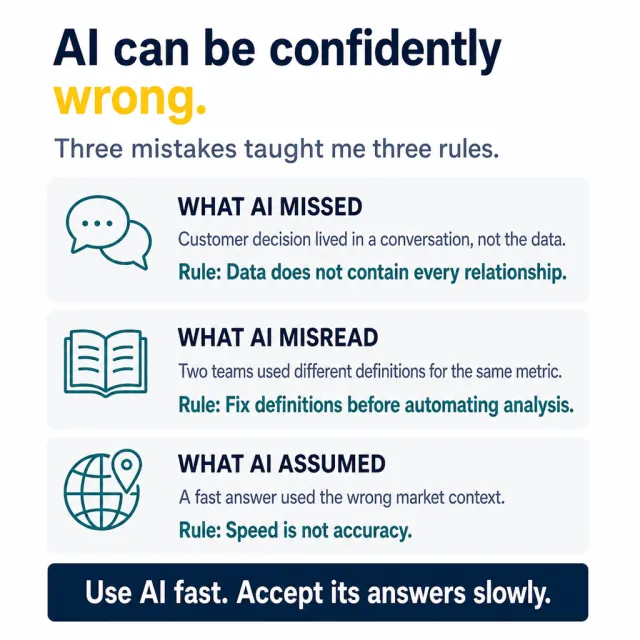
Post visual for AI can be confidently wrong.

AI can be confidently wrong.

Three mistakes, three rules: data does not contain every relationship; fix definitions before automating; speed is not accuracy.

Use AI fast. Accept its answers slowly.
View on LinkedIn →